it's about life, my life, quilts, midwifery, and whatever else occurs to me.
Showing posts with label Aussie alphabet. Show all posts

18 June 2020

The Aussie alphabet: Q is for Queensland

The beautiful state of Queensland, my home for the 6+ years of living in Australia.

https://en.wikipedia.org/wiki/Queensland
As diverse a place as you could imagine, in every possible way. Huge - according to Wikipedia, bigger than all but 15 countries. 

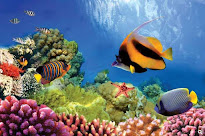
Home to the Great Barrier Reef which used to look like this

but sadly now looks more like this


Brisbane is the capital and largest city: https://en.wikipedia.org/wiki/Brisbane   Brisbane was the home of the Turrbal and Jagera people but got its name from the first governor of the penal colony that  as  If you don't want to read the whole Wikipedia entry, here is a link to the Brisbane CBD as seen from a nearby suburb.


It was an amazing place to live and I miss so much about it.


01 June 2020

The Aussie alphabet: P is for possum

Often of a summer evening, well, really any time of year, we would be enjoying dinner or after-dinner on the deck and be visited by a possum. I don't know if it was always the same possum, but it was always interested if there was food on the table. Sometimes it would come quite close to the table (and us around it).

These possums are Oz natives, as you can read here in the Wikipedia entry.


Here's an explanation of the difference between Opossums that are native to the Northern hemisphere, and Possums that are native to Oz, from the perspective of a Kiwi. Possums were
introduced from Oz to NZ (bad idea apparently as they are now a big PEST) but their fur does make lovely knitted goods so that's an idea for you knitters.


You can see they're sort of cute. But mostly you don't want to get that close to them.


20 March 2015

The Aussie alphabet: O is for Opera House

How could O be for anything else?

The Opera House, normally:


Bonus: the Harbour Bridge in the background!

You can see more pictures of it if you click on that link just above, and read about the history, the construction, etc. etc. if you want. Fun fact: the architect - Danish!

The Opera House, during Vivid Sydney 2014:


Photo credit: me.

The building is beautiful and, of course, iconic. Never actually made it to a performance within the walls, but really, that's okay.

Now that I think of it: O can be for one other thing: 


This is an opal in the rough - still embedded in the rock it formed in.
Credit: http://www.johnbetts-fineminerals.com/jhbnyc/mineralmuseum/picshow.php?id=25867


And this is a fire opal ready to be set into a piece of jewelry. These guys are super expensive, when they are solid - (this one isn't, it's on Etsy!) and stunning.

Read all about them here:


22 February 2015

The Aussie alphabet: N is for Ned Kelly

Moving on with the Aussie alphabet - I hate to leave projects unfinished! - -

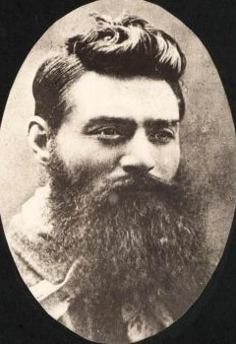
Ned Kelly is the Jesse James of Australia, I guess you could say. He's known as the last of the bushrangers, defined as bandits of the Australian outback ( = bush) who harassed, robbed, annoyed, and sometimes killed the more law-abiding folk around them.


This is Ned, aged about 25, shortly before his death.

Ned was born in 1855 in Victoria, the eldest of 8 children of John and Ellen (Quinn) Kelly. John had been transported from Ireland for pig theft, and married Ellen in 1850 after serving his sentence of 7 years. 

By the time he was 14, Ned had already been in trouble with the authorities, and his chief occupation seems to have been horse theft until he graduated to killing police officers who were trying to apprehend him, and robbing banks. He was declared outlaw in 1878, complete with a price on his head, and finally captured in 1880 in a shootout with police. At this last shootout, he was wearing this suit of homemade armour, now iconic in Australia:

Image from http://www.dailymail.co.uk/news/article-528900/Ned-Kellys-home-armour-display-archaeologists-grave-Australian-prison.html


He was tried for murder, found guilty, and sentenced to death; he was hanged on 11 November 1880. As has happened with other so-called outlaws, there are those who yet view him as a hero struggling against the oppression of the ruling class and their agents, the police. His exploits are now the stuff of legend.

23 September 2014

The Aussie alphabet: M is for morning tea

Morning tea. Now there is a custom that needs to be adopted in the US.

Morning tea - not just a cup of something hot at around 10 or 10:30 in the morning, like the American coffee break.

Morning tea has tea, yes; coffee (always - this is Australia where they are serious about coffee). But there's more! Because you can't drink tea or coffee without a little bit of something to go with it, can you?

Scones. Banana bread or carrot cake. Lamingtons (yuck, but some people like). Even brownies. Or savoury treats like mini-quiches. Often bite-sized so you can have more than one or two. Sometimes fruit. Mmmmmm. You almost don't need lunch.

No conference, meeting, or gathering that happens in the morning will fail to offer you morning tea. It's part of the deal. Always good to know in case you didn't leave yourself enough time to eat breakfast; you needn't worry that you'll faint before lunchtime. Morning tea to the rescue.

I shouldn't leave M, though, without mentioning 'mate' and mateship. 

Mate = friend, buddy, pal; can be used as a noun ('my mates are coming by later') or a form of address to virtually anyone regardless of how well you know them ('hey mate, how're you going?' - to a friend you haven't seen in a while; 'no worries, mate' - to a stranger who has just apologised to you for some minor contretemps like bumping into you in a crowded space). In the past it was used mostly by men ('blokes') to other men. These days it's for anyone, though it seems to me I hear it mostly from blokes.

Mateship = an Australian value implying equality, loyalty, and friendship (says Wikipedia). A bit more intense than camaraderie. It comes up in military contexts where each one depends on and looks out for all the rest, a Band of Brothers kind of thing, or other circumstances in which a group of people share a common, usually difficult, experience.


20 July 2012

The Aussie alphabet: L is for larrikin

So, Wikipedia says larrikin refers to a "mischievous or frolicsome youth" and larrikinism an "Australian folk tradition of irreverence, mockery of authority and disregard for rigid norms of propriety."  The Ur-larrikin was, of course, Ned Kelly, although I think there's a pretty big gap between irreverence and shooting police, which is the most serious crime of which he was accused.  He usually expressed his larrikinism by committing robberies, cattle rustling, the sort of thing that today might be referred to as hooning.


L also stands for a couple of other Oz specialties:


Lantana.  It's pretty, right?
1) Lantana.  A movie with Italian-Australian actor Anthony LaPaglia.  Also, and more annoyingly, a ubiquitous and noxious and invasive weed that grows everywhere around here.  My thought: "But it's so pretty!"  See for yourself.


2) Lunch, Sunday.  It's not that all they do here is eat.  But let's face it, sharing a meal with friends is one of the joys of life, and Aussies take a back seat to no one in that department. Besides morning tea and of course the barbeque, another mealtime custom is Sunday lunch.  It seems to be one of the Brit customs that has survived the colonial period.  Not unlike the Sunday dinners of my childhood, except that it's not preceded by church-going, and it doesn't always feature a big piece of dead animal, at least not among people with whom I've shared it.  Wikipedia says it's aka Sunday roast - but dead animals are optional.  The important ingredients are food and friends, and perhaps a nice bottle or two of wine.  Lovely way to spend a Sunday arvo - that's "afternoon" for those of you who don't know Strine.

02 April 2012

The Aussie alphabet: K is for kookaburra


I've been trying to avoid using animals in this compilation because it's, or they are, such a cliché here. And of course there are some obvious candidates, you know the ones; the macropod and the somnolent eucalyptus eater. But I hardly have any contact with those two, whereas right outside our house somewhere, we have a kookaburra who "sings" for us - screeches, more like - most mornings and afternoons. And this is how it sounds. Loud. Mighty loud at 5 am.

Here's a nice photo of a blue-winged kookaburra.

You know, of course, about the Great Copyright Fight. In case you don't, it started with this song, and the melody sounds like this. Then, in 1981, an Aussie band Men at Work made the charts with a song called "Down Under"; of course you've heard it...it had an instrumental bridge that sounded a lot like the main melody of the original song from 50 years earlier. The copyright owner sued the band for royalties and won, but only back to 2002.

Apparently the original has now been modified to eliminate the use of the word "gay" in its erstwhile meaning of "happy" in order not to cause the children of today to ROFLTAO.

01 September 2011

The Aussie alphabet: J is for Jewish

Who's Jewish in Australia? That can be a tough one to sort out, when the big machers have last names like Pratt. For real. But, turns out his last name was Przecicki until his family moved from Poland to Oz in 1938, and anyway he lived in Melbourne which is definitively not Brisbane.

Melbourne is where the bagels I get in Coles come from. Melbourne is the home of the country's largest Jewish community, as a result of the mid-19th-century Victorian gold rush. It has whole neighbourhoods - sorry, suburbs - that are Jewish in flavour, mostly in the southeast. I've even visited one, Toorak, looking for a good bagel bakery with fresh, not-in-a-plastic-bag-in-Coles bagels. Found bagels - not that good - but walking around I felt like I was back on Avenue J in Brooklyn.

Wikipedia says there were at least 15 Jews who arrived with the First Fleet in 1788. The mishpocheh grew slowly until the gold rush, which saw a big increase. The Jewish population more than doubled between 1933 and 1955, as Oz set no limits on Jewish immigration (hey, they were white, so it was all good!).

Looking for more prominent Aussie Jews, I find Sidney Myer of the department store - yawn, although interestingly he converted in 1920, and Frank Lowy, of Westfield shopping centres fame. Nice to know that every time I spend money in the Temple of Consumerism, aka Indooroopilly Shopping Centre, I'm helping keep Frank near the top of the Rich List. Then Wikipedia surprises me by revealing that John Monash, war hero, honoured with an eponymous university, was a Yid! And as if that weren't enough, so is Zelman Cowen. Zel was the VC at UQ during the Vietnam War and has a building named after him. (I should add that I've wondered whether, with a name like Zelman, that Cowen wasn't a misspelling of Cohen.) Zel was also - shocker - Governor-General from 1977-1982. For those of you who don't know, the GG is the Queen's official representative in Oz, effectively the stunt Queen. And Zel wasn't even the first Jewish GG: nope, that was Isaac Isaacs in the 1930s, who was also the first Australian-born GG.

As for Brisbane, the Jewish population here is estimated at 1800 and change. More idle Googling reveals that there are two orthodox synagogues in Brisbane, one in the CBD (where almost nobody actually lives, so it must be like the one on 47th St in NYC, mostly for the weekday morning minyan) and one in Greenslopes, south of the CBD. There's also Beit Knesset, in Camp Hill, an eastern suburb, that's described as "Progressive." Oddly, the next Google listing after Beit Knesset is Langri Tangpa Buddhist Centre, so guess Google thinks Progressive Judaism is just Buddhism with knaidlach.

And all this Googling has uncovered a nearby source for frozen challah, and bagels that might be better than the ones in Coles: a deli in West End. I may just have to go there tomorrow. But tomorrow is Saturday...will they be open?

19 May 2011

The Aussie alphabet: I is for indigenous

Does any country get indigenous right? We know what happened in the young United States, where treaty after treaty was broken by the European invaders. Later, Native American children were removed from their families and sent to White schools, and the legacy of alcoholism, substance abuse, poor perinatal outcomes, chronic disease and premature death, not to mention poverty and hopelessness, is passed on from one generation to the next.

And here in Oz? Same story. Aboriginal Australians have all the same problems. Successive governments seem to either ignore them (Liberal-National) and hope they'll just go away, or make a lot of noise about doing something about them without, in the end, making much of a difference (Labor).

13 November 2010

The Aussie alphabet: H is for Holden


Holden, the iconic Australian vehicle. It's GM, Australian-style, Down Under's Chevy. It comes in a range of models from the tiny and cute to the sedate sedan to the SUV (of which there are many, many). But we can't talk Holden without talking ute, Ozspeak for utility vehicle, which I understand is every teenage boy's dream car. Remember the El Camino, which was a car in the front half and a pickup truck in the rear half? It's alive and very, very well here in Oz. From its beginnings as a real utility vehicle, it's been pimped to offer all the goodies a CUB* could want in a "lifestyle vehicle." Here are a classic EH station wagon from the 60s, along with a contemporary Commodore sedan and a ute.

Once I walked past an EH sedan of similar vintage to the one pictured here parked on the street and noticed the name badge across the boot ( = "trunk") had been modified from HOLDEN EH to read OLD EH. I thought the owner meant "old, eh?" until someone told me the model name was EH. Either way it's good.
*CUB: cashed-up bogan

31 July 2010

The Aussie alphabet: G is for Gecko


Geckos are by no means unique to Australia. I'm including them because, this being my first time living in a warm enough climate for them, they hold a certain fascination for me. Their vocalizations -- they sort of chirp -- seem way too loud for their size. Upside is they supposedly eat insects, including mosquitoes. Downside is they produce little turds that you find in places like your bathtub and you have to clean up after them every day.

Google has gazillions of gecko images. Not all of them are images of actual real live geckos, of course. You get gecko jewelry, gecko sculptures, Michael Douglas, and the Geico gecko. When you search "Australian gecko" you also get Ugg boots and the money shot of Sydney opera house with the harbour bridge in the background. This one looks pretty much like the ones I see clinging to my living room ceiling or scurrying across the driveway.

17 July 2010

The Aussie alphabet: F is for ferry; footy


So, ferries. Certainly not uniquely Australian. But yesterday, on the road back from Toowoomba, we got off the motorway and took the scenic route, Moggill Rd, from its western origin. What we didn't know was that the road ends at the river, yes, ends; and in order to get to the other side of the river, the cars drive onto a funny little ferry. Here's a link to the map showing how the road just ends on either side of the river. The ferry is pulled across the river by a cable, see top photo, and once it's across the cars drive off and continue on their way. This arrangement is on a major commute route. The traffic backups during peak hours don't even bear thinking about.

But, footy! THAT'S Australian. Now, footy could be any one of four games played here: rugby league, rugby union, soccer, or Australian Rules Football. But usually it refers to Aussie Rules. Now that I've lived here for nearly two years, here is what I know about these games:

1) Soccer is called soccer, just like in the US. It may be the beautiful game elsewhere, but here, of the four it's probably the least popular.
2) Rugby scores often don't get out of the teens, whereas footy scores can approach 100.
3) If there are four upright poles in each end zone it's footy; if the goalposts are H-shaped, it's rugby.
4) A lot of footy teams are based in and around Melbourne, the spiritual home of Aussie Rules.

The nuances of league vs. union are beyond me, and none of them look like American football, mainly because there are no timeouts between plays, no pads, no helmets, and the ball is a bit rounder without the pointy ends.

I took the photo above at an actual footy game - yes, I have been to one, thanks to Brian - about a year ago.

10 February 2010

The Aussie Alphabet: D is for Diminutive

You don't need to be in Oz for more than 15 minutes before you realize (realise) that no energy is to be wasted pronouncing unnecessary syllables. While "bottle-o" might be recognizable (recognisable) as Ozspeak for "bottle shop" (which is itself Ozspeak for "liquor store"), you might wonder at "rego" (pronounced with soft g) -- this refers to car license plates and comes from "registration," at 4 syllables clearly way too long a word. You might get "muso" (musician) but would you get "arvo" (afternoon) or "cozzie" (costume, Ozspeak for swimsuit)? Do you fancy "brekky at Macca's" (breakfast at McDonald's)? I live in "Brissie" (Brisbane) where I often need my "sunnies" (sunglasses) and I go grocery shopping at "Woolies" (Woolworths). "Lippie" (lipstick), "bikky" (biscuit, = cookie [must look up etymology of that!]), "bikie" (motorcycle gang member) -- sometimes we talk like we're all still in "kindy" (kindergarten) here.

08 December 2009

C is for ... Crocodile; Coffee; College

Once again, I couldn't decide which of the C words should go into this Aussie alphabet so I put all 3 in.

Crocodiles

Fab facts for all ages about crocs: http://www.kidcyber.com.au/topics/crocs_oz.htm


Coffee

This post pretty much explains the history of coffee in Oz and why it is a national obsession. http://coffeegeek.com/opinions/georgesabados/06-12-2007

and this gives a sense of the intensity of the love affair --
http://www.coffeesnobs.com.au/


College

"College" here has a few meanings. In general though, what it doesn't mean is an institution that offers bachelor's degrees and some graduate degrees. For that you have to go to university -- of course, it's called "uni" because this is Australia and no energy is wasted on unnecessary syllables. So "college" can be:

1. a branch of TAFE (Technical and Further Education), which is roughly equivalent to a US community college, where you can study things like watchmaking, beauty, meat retailing, ASL (Australian Sign Language), and practical nursing. However, these are usually called "TAFEs" and not "colleges."

2. a secondary school, generally private, corresponding to US grades 7-12. This makes it very confusing until you get used to "college" meaning something very like "high school." Many are at least nominally affiliated with a church, some have boarding options, Latin mottos, and so far they all seem to have uniforms. Most of the time when I have heard people talking about "college" they've been talking about this kind of place.

A few post-secondary colleges are specialized, for example art colleges, and can grant bachelor's degrees, but most give certificates. Sometimes the credits earned can be applied to advanced standing in a university. TAFEs and their ilk are supposed to be a way of getting into university for those who didn't do so well in high school, a similarity to US community college.

09 October 2009

The Aussie alphabet: B is for ... beer? Bundy? -- baseball????


Ah, how to choose among these candidates to represent B? Beer was the obvious one, and by the way, America, NOBODY drinks Foster's here. Then there is Bundy, properly known as Bundaberg, rum produced right here in the midst of the canefields in Queensland. With, oddly enough, a polar bear as its logo. Finally, I happened to be in a sporting goods store this morning and was surprised by this display of gear that I recognized immediately as pertaining to the Great American Pastime. Very strange.

23 August 2009

The Aussie alphabet: A is for "ABC"


Right, the ABC. Like in the US, it's a television and radio network. Unlike in the US, it's public. Kind of like PBS and NPR rolled into one, but with no pledging, because it's actually government funded! Like, the government thinks that public broadcasting is a good idea! There is, unfortunately, no all-news FM station in Brisbane. So we listen to the news on AM, Radio National, which really is national. The traffic and weather updates start in Brisbane, and go clockwise right around the major cities. Very handy if we want to know where the traffic is stuffed up in Melbourne, or how cold it is in Hobart. The AM frequencies here are odd: instead of a 3 or 4 digit number ending in "0", they can be any even number. That Radio National frequency is 936, and the local Brisbane station is at 612. FM stations have the same frequencies as in the US. On TV, there are ABC1, ABC-HD and ABC2. Oh, right, there are ABC shops too, where you can buy books, games, DVDs, that sort of thing. Right now, on ABC2, I'm watching Ioan Gruffudd as Horatio Hornblower.